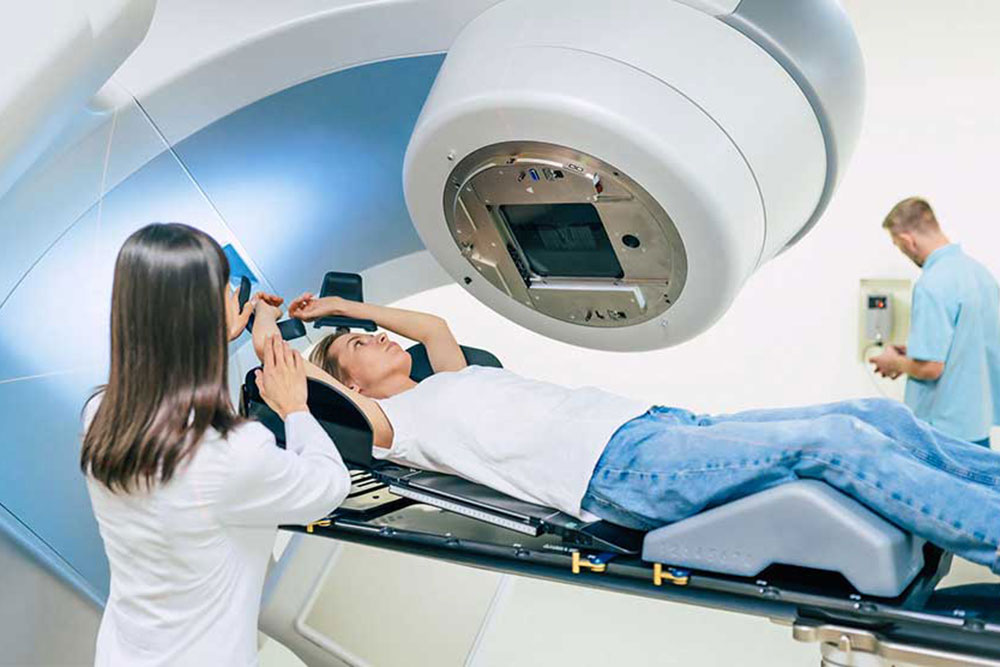
Breast Cancer Treatment

Radiation Therapy for Breast Cancer

Most people with breast cancer receive more than one therapy as part of a complete treatment plan. Breast cancer treatments include surgery, radiation therapy, chemotherapy, targeted therapy, hormone therapy, and immunotherapy. Your medical oncologist and breast cancer surgeon will work with the radiation oncologist when radiation therapy is recommended.

The order that treatments are given is specific to each patient based on the type of breast cancer, where it’s located in the breast, the type of surgery performed, stage, hormone status, and overall health of the patient.

At West Florida Radiation Therapy, our team cares for breast cancer patients in the Clearwater area whose treatment plan includes radiation therapy.


West_FL_Breast-Cancer-Raidation

When is Radiation Therapy Used to Treat Breast Cancer

Radiation therapy is used most commonly after breast-conserving surgery, called a lumpectomy, to be sure that any unseen cancer cells are destroyed. We use hypofractionated radiation therapy for breast cancer whenever possible, requiring fewer total sessions. Treatments are given five days a week for three to five weeks.

Radiation therapy can be given before surgery to shrink the tumor, if recommended by the radiation oncologist. Most patients who have a mastectomy do not receive radiation therapy, but it may be added to the treatment plan if the cancer is growing near or on the chest wall.


Types of Radiation Therapy for Breast Cancer Treatment

There are two categories of radiation therapy used to treat breast cancer: external beam radiation therapy (EBRT) and internal radiation therapy, called brachytherapy. Our radiation therapy team will review the information provided by the other physicians on the team to determine which type of radiation would be most beneficial and the best timing.

External Beam Breast Radiation

Several types of external beam radiation therapy are available for breast cancer patients in the Clearwater area.
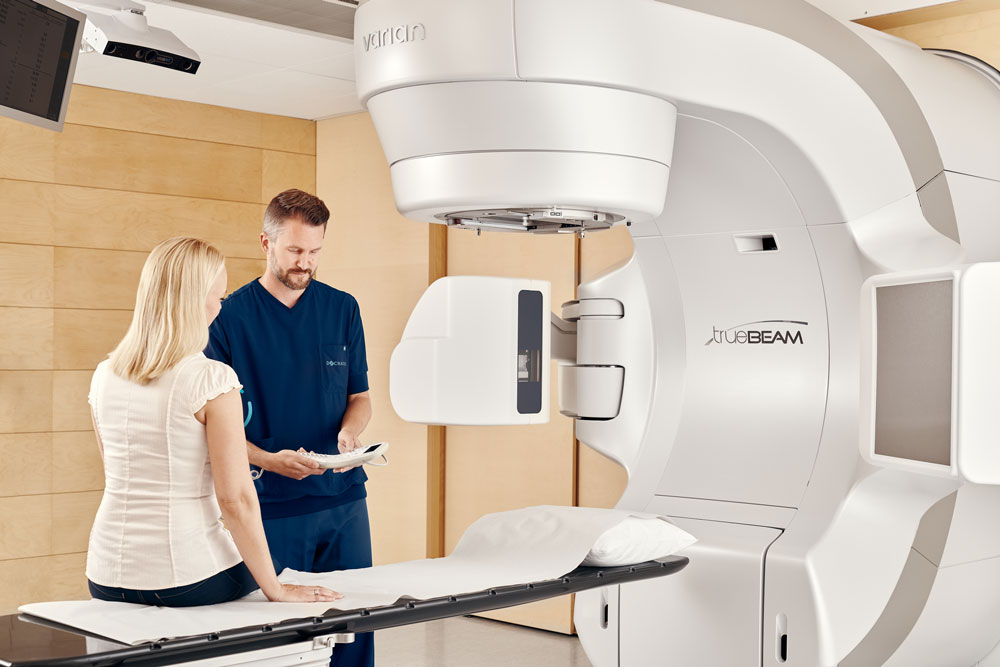
West_FL_RapidArc-01

RapidArc®

Uses an advanced technique that combines intensity modulated radiation therapy with a rotational arc delivery for highly precise radiation delivery.
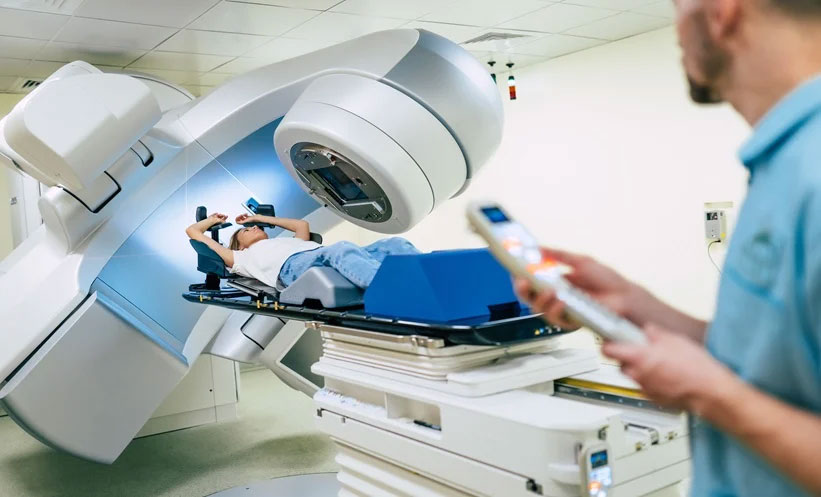
West_FL_IMRT

Intensity-Guided Radiation Therapy (IGRT)

uses 3D imaging (CT, MRI, or PET scans), with precise technology to pinpoint and treat cancerous tumors.

Learn more about how different types of external beam radiation work.


Internal Radiation Therapy for Breast Cancer

Internal radiation therapy, called brachytherapy, for breast cancer can be used for early-stage cancer that is small and has not grown beyond the area where it started in the breast. If this is part of the treatment plan, small radioactive pellets are placed in a tube, and that tube is surgically placed in the breast, near the lumpectomy site. The pellets are left in place for a short period of time and then removed. This process is repeated over the course of several days. When treatments are complete, the tubes used to hold the radiation are also removed from the breast.


The Initial Consultation and Treatment Planning for Breast Radiation

Before you begin your radiation therapy, you will meet with the radiation oncologist to discuss the goals of your treatment, what to expect, and treatment planning. Our team will guide you through the planning process, placing you on the table of the linear accelerator where you’ll receive treatments. Because treatment needs to be highly precise, they will determine exactly where to direct the radiation. A mark may be placed on the skin to make sure you are lined up in the same spot for each treatment. They will review what to expect during each session and schedule your treatments.

Beginning Daily Treatments

Patients can expect to receive radiation therapy five days a week under the supervision and care of the radiation oncologist and radiation therapists. Our certified therapists will ensure the treatment progress is performed exactly the same way during each treatment session. The machines used during treatment are checked daily to ensure they are functioning properly.

Possible Side Effects of Radiation Therapy

There are some common side effects associated with radiation therapy, which include:

  • Fatigue, even after treatments are complete

  • Skin irritation, which may look like red, dry, tender, or itchy skin, similar to a sunburn
  • Tenderness in your breast tissue, especially at the location where radiation was received
  • Swelling, which may make your breast feel heavier

In most cases, these side effects improve over time after treatment is complete.

Talk to your radiation oncologist about side effects you notice. They can often offer helpful tips on how to find relief.

West_FL_External-Beam-Radiation-Therapy-Side-Effects-01

Breast Reconstruction: Best After Radiation is Complete

West_FL_Breast-Cancer-Reconstruction

If you are considering breast reconstruction after treatment, a plastic surgeon will consult with the cancer care team on the best timing. In some cases, reconstruction is done at the same time as surgery. If your reconstruction will be a second procedure, discuss the timing of radiation therapy with both your surgeon and radiation oncologist.

Radiation Therapy in Clearwater, Florida

Choose a radiation oncology team that is convenient for you and those who may be a part of your transportation to and from visits. West Florida Radiation Therapy offers state-of-the-art cancer treatment technologies in the Clearwater area.

Contact us today at 727-796-5354 to request a consultation.