Lung Cancer Treatment

Lung Cancer Treatment With Radiation Therapy

There are many different types of treatments available to lung cancer patients, depending on the type of lung cancer, where it’s located, the stage, and the patient’s overall health condition. Your medical oncologist will typically lead the treatment team that coordinates with the radiation oncologist and surgeon, as well as other specialists as needed.

Radiation therapy can be used to treat both small-cell lung cancer (SCLC) and non-small cell lung cancer (NSCLC). The oncologists at West Florida Radiation Therapy use the most advanced types of radiation therapy to care for our patients. You have a choice in where you receive your radiation treatment. Stay close to home and make it convenient.

External Beam Radiation Therapy for Lung Cancer Treatment
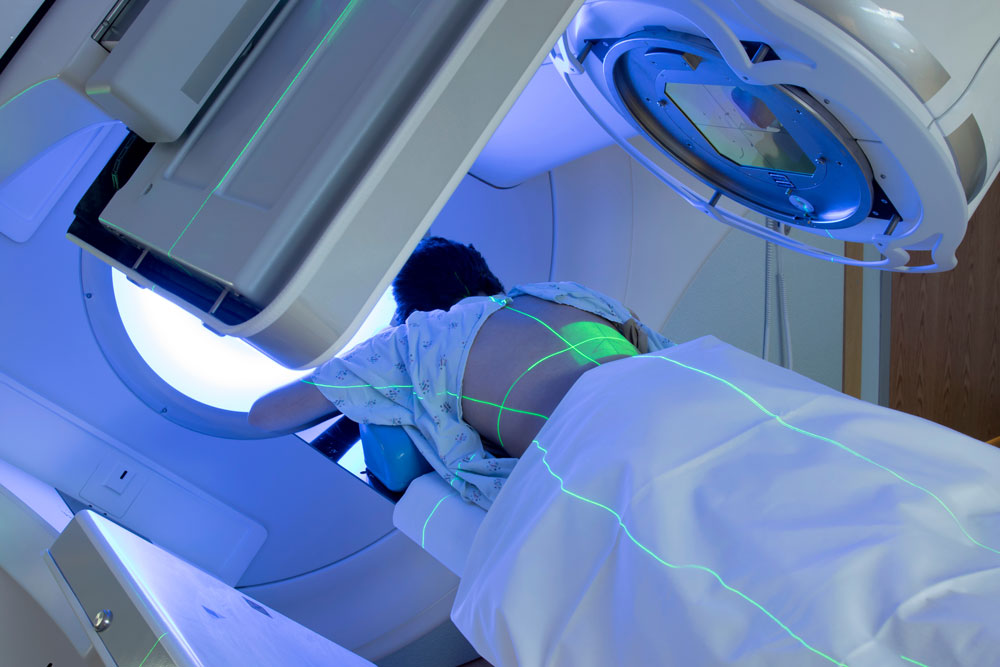
West_FL_External-Beam-Radiation-Therapy

External beam radiation is the most common type of radiation therapy used to treat lung cancer. This type of therapy does not touch you. Instead, it uses a machine outside the body, called a linear accelerator, to send high-intensity beams of radiation toward the cancer.

Radiation therapy is most effective in treating lung cancer that has not metastasized (spread) throughout the lung. It’s also useful in shrinking tumors that spread to other areas of the body, such as the chest, brain, or other organs.
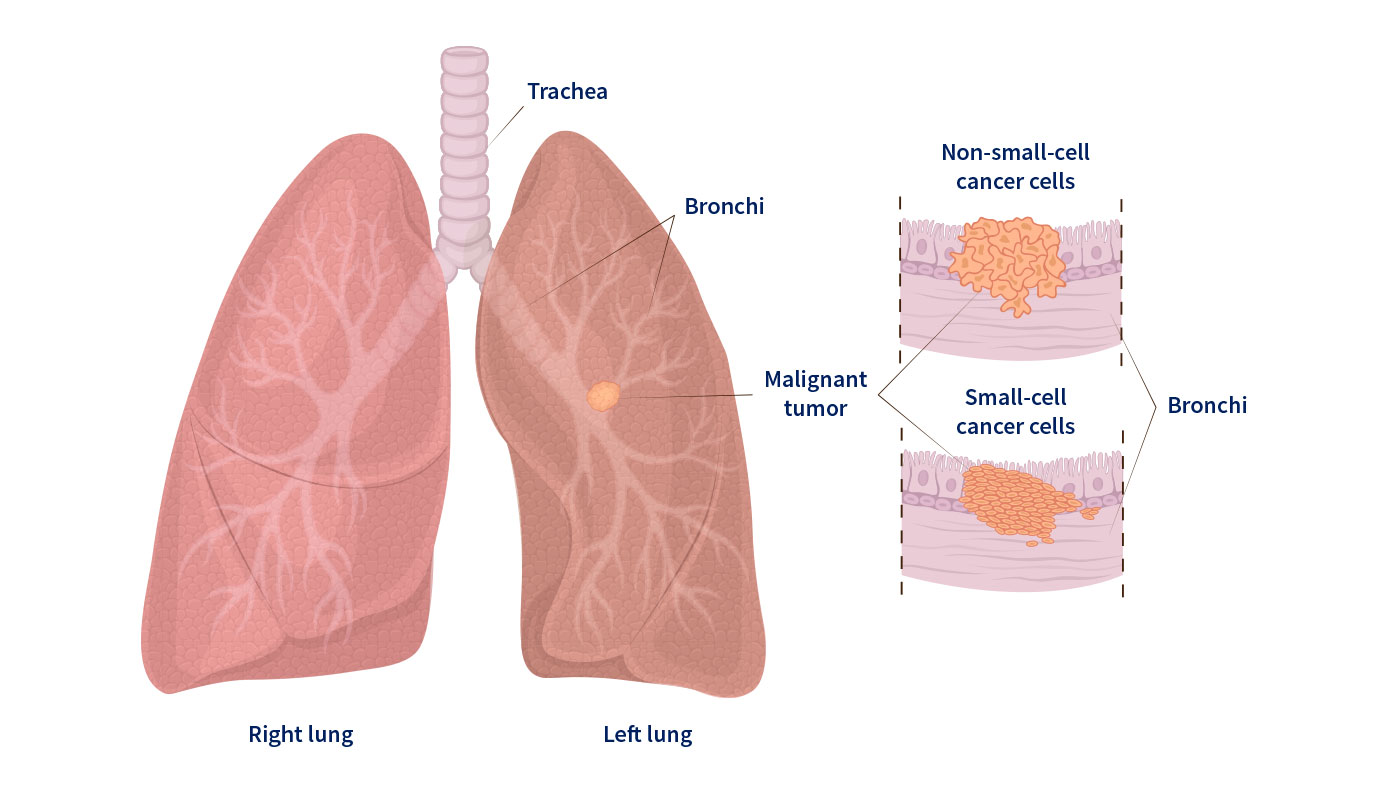


Treating Non-Small Cell Lung Cancer with External Beam Radiation

Patients with non-small cell lung cancer can benefit from external beam radiation therapy in several cases, including.

  • As the main treatment, if the patient isn’t healthy enough to undergo surgery or if surgery can’t be performed due to the tumor’s size or location.
  • After surgery, to kill any lung cancer cells that may have been left behind. Chemotherapy may also be used to kill any unseen cancer cells that remain in the body.
  • Before surgery, often with chemotherapy, to try to shrink the tumor, which makes it easier to remove.
  • To shrink tumors that have spread to other areas of the body.
  • To relieve pain or other symptoms such as bleeding, trouble swallowing, or cough caused by advanced non-small cell lung cancer tumor growth.

The right timing of radiation therapy for each patient is determined by the care team when planning a personalized treatment plan.

External Radiation Therapy for Patients with Small Cell Lung Cancer

Radiation therapy is used in a different way for small-cell lung cancer patients compared to non-small cell lung cancer patients. Small-cell lung cancer patients may receive radiation for one of the following reasons:

  • To treat the tumor and lymph nodes in the chest in limited-stage small-cell lung cancer. If radiation is given at the same time as chemotherapy, it is called concurrent chemoradiation. However, due to its intensity, some patients may not be able to handle this well.
  • After surgery, for those with extensive-stage small-cell lung cancer to treat any cancer cells left behind. For those with limited-stage lung cancer who couldn’t tolerate chemotherapy and radiation at the same time, radiation can be given after the chemotherapy phase of treatment is complete.
  • To help minimize the chances of cancer spreading (metastasizing) to the brain, prophylactic (preventative) cranial irradiation may be given.
West_FL_Non-Small-Cell-Lung-Cancer

Types of External Beam Radiation Therapy Used for Lung Cancer Patients

There are several types of external beam radiation that could be used to treat lung cancer. The right technology for each patient depends on the location of the cancer in the body. The West Florida Radiation Therapy oncologist will determine what’s best for you based on the test results and images provided by your cancer care team.
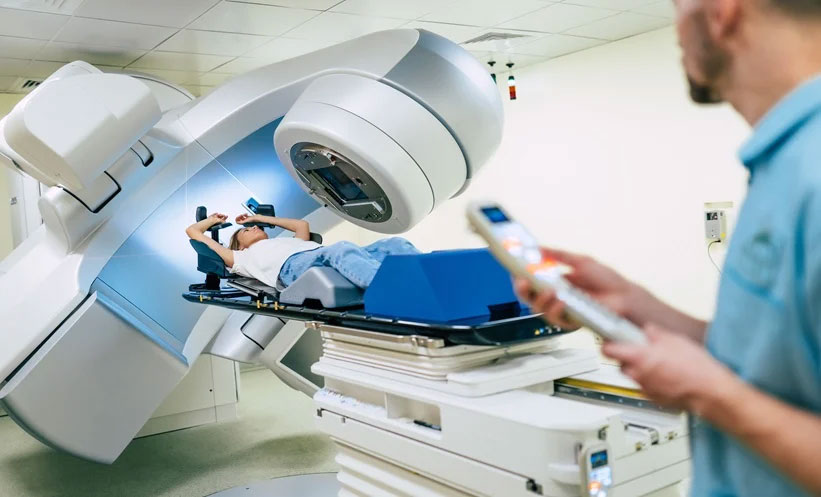
West_FL_IMRT

Intensity-Modulated Radiation Therapy (IMRT)

IMRT is a type of external beam radiation therapy that uses advanced technology to manipulate beams of radiation to conform to the shape of a tumor. This makes it possible for the radiation oncologist to direct high doses of radiation at the lung(s) in a manner that reduces the risk of damaging nearby organs. This type of radiation may also be used to treat lymph nodes in the chest where lung cancer is likely to spread. Treatments are given five days a week for several weeks. The total number of sessions is determined based on the goals of treatment and the size of the tumor.
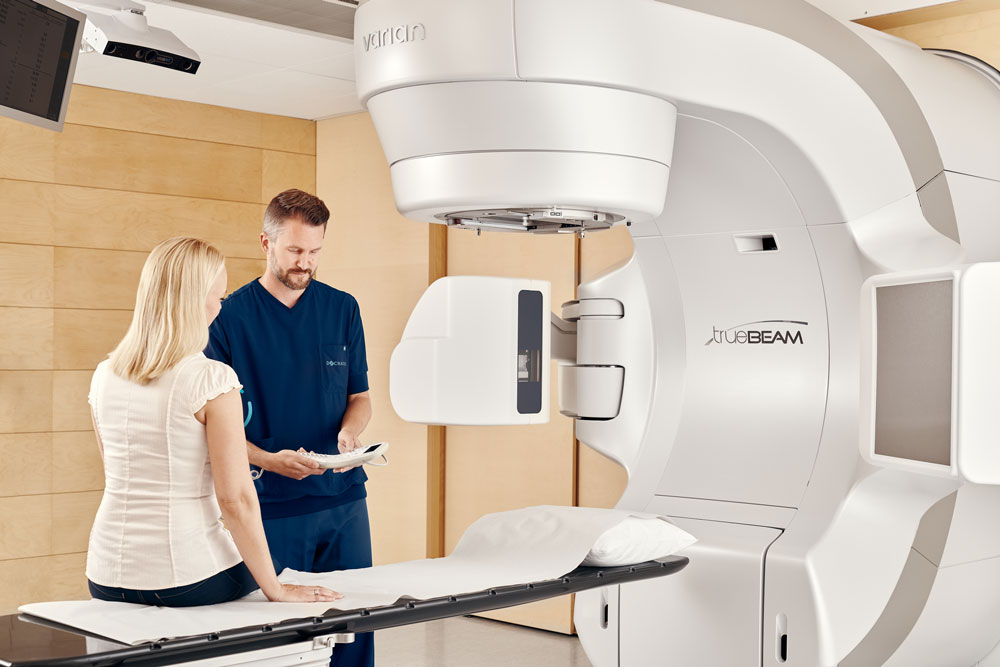
West_FL_RapidArc-01

RapidArc®

RapidArc is a technique that combines intensity-modulated radiation therapy with rotational arc delivery. The machine rotates 360 degrees around your body, enabling very small beams with varying intensity to be aimed directly at the tumor in your lung(s) from multiple angles. This specialized software and advanced equipment technology delivers highly accurate treatments more quickly than other types of radiation, while sparing healthy tissue. Treatment times with RapidArc are similar to other IMRT treatments: five days a week for 4-8 weeks.

Possible Side Effects of Lung Cancer Radiation Therapy

Side effects will depend on various factors, including the area of the body that’s treated, the type of radiation therapy used, the total dose of radiation, and whether chemotherapy is given at the same time.

Common side effects of radiation therapy for lung cancer may affect how you feel when eating, especially if the upper chest area is included in the treatment area. You may not experience all of these.

  • Skin irritation, similar to sunburn, at the treatment site

  • Loss of hair at the treatment site

  • Fatigue

  • Loss of appetite leading to weight loss

  • Nausea and/or vomiting

  • Shortness of breath or cough when the lungs are treated

  • Sore throat and difficulty swallowing when the esophagus is part of the treatment area

  • Memory loss or headaches when the brain is treated

Most side effects go away on their own after treatment is complete. However, some may last a long time or become permanent. Talk to your oncologist or radiation therapist right away if you notice any side effects, so steps can be taken to reduce or relieve them.


 
West_FL_External-Beam-Radiation-Therapy-Side-Effects-01

Other Types of Lung Cancer Treatment

There are several components of lung cancer treatment, which means some patients may need more than just radiation therapy. That’s why our team works closely with medical oncologists in the Clearwater area. Other treatments may include:

Surgery

This may be performed to remove the tumor, if possible. Surgery might not be possible if the cancer has grown in several areas of the lung.

Chemotherapy

Lung cancer doesn’t usually show symptoms until it has reached a later stage, often affecting nearby lymph nodes or other areas of the body. For these patients, chemotherapy can be given through an IV to kill cancer cells throughout the body.

Targeted therapy

Extensive advancements in lung cancer treatment for non-small cell lung cancer now make it possible to test some patients for specific genetic mutations. Based on the test results, some patients are given targeted therapy. The purpose of this drug is to target the specific mutation so that cancer cells stop growing. Additionally, it reduces some of the side effects of other treatments, such as chemotherapy, because there is less damage to healthy cells.

Radiation Therapy for Lung Cancer in Clearwater, Florida

Remember, you have a choice when it comes to where you receive your radiation therapy. West Florida Radiation Therapy is proud to offer state-of-the-art radiation therapy for lung cancer, close to home.

Contact us today at 727-796-5354 to request a consultation.