Basal Cell Carcinoma
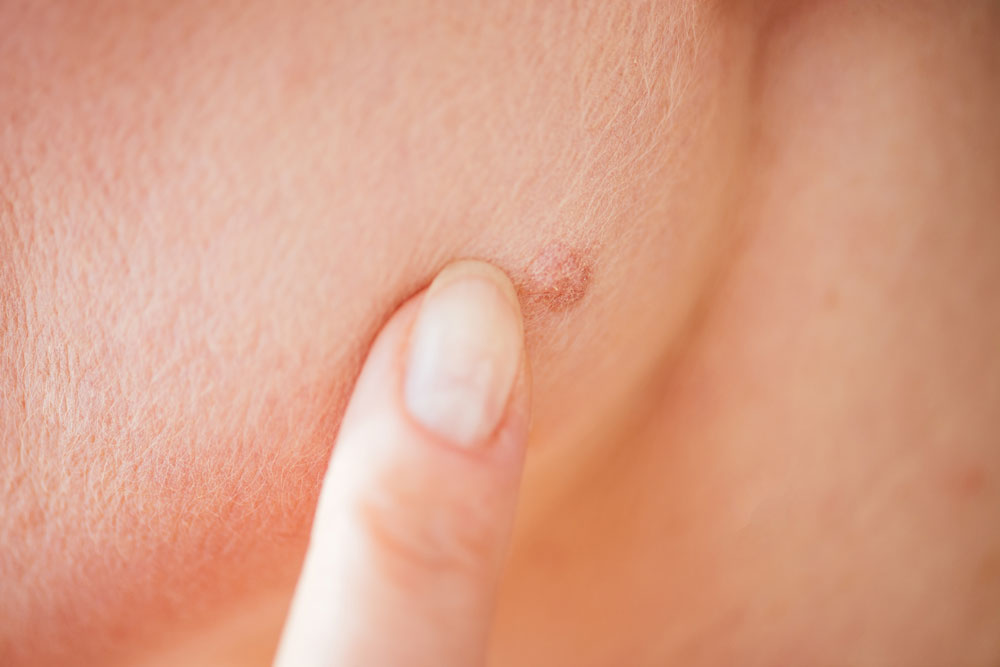
This type of nonmelanoma skin cancer appears as uncontrolled growths or lesions in the skin’s basal cells found in the lower epidermis. About 80% of skin cancers develop from this type of cell. It often looks like open sores, red patches, shiny bumps, pink growths, or scars. Although this type of cancer can occur on any area of skin that has been exposed to the sun, it’s most common on the face. Basal cell skin cancer grows slowly and rarely spreads to other parts of the body. However, if left untreated, it can grow into nearby areas and invade the bone or other tissues beneath the skin.
Squamous Cell Carcinoma
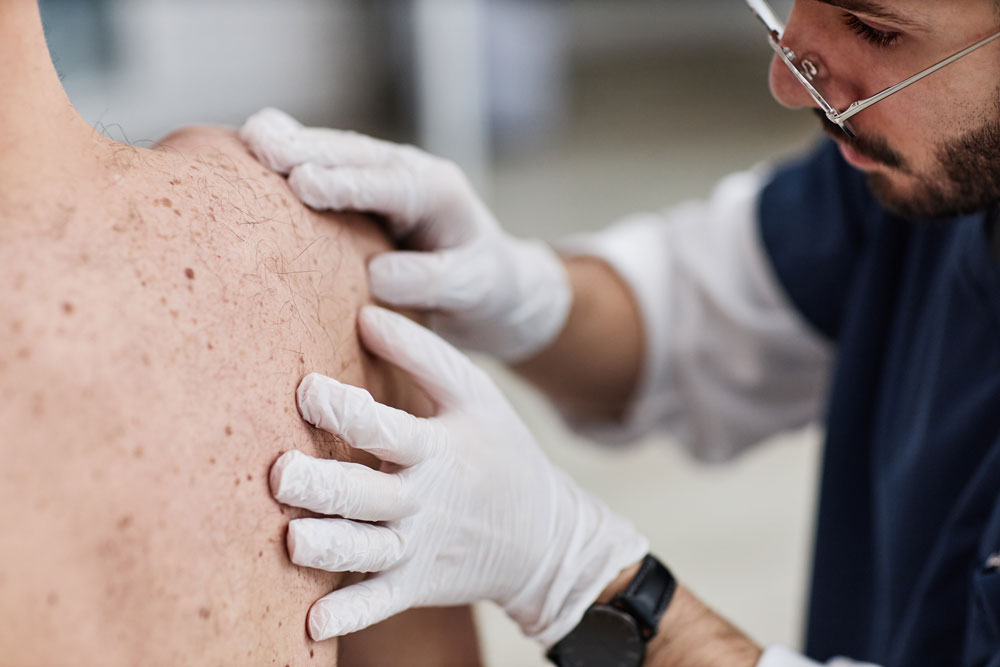
Squamous cell skin cancer is an uncontrolled growth of abnormal cells that also occurs on parts of the skin exposed to the sun, primarily within the upper (outer) part of the epidermis. While areas like the rim of the ear, lower lip, face, balding scalp, neck, hands, arms, and legs are often the most affected, it may also occur in places on your body that do not receive any sun exposure, including inside the mouth and on the genitals.
Squamous cell carcinomas can look like scaly red patches, open sores, elevated growths with a central depression, or warts that may crust or bleed at times. Although this type of cancer isn’t usually life-threatening, squamous cell cancer can sometimes spread to lymph nodes and organs inside the body, causing serious complications if left untreated.
Even if skin cancer spreads to other parts of the body, it is still considered skin cancer because of where it originated.
Surgery to Remove the Skin Cancer
Surgery to treat skin cancer may be done in one of several ways. The method your oncologist recommends depends on various factors, including the size and place of the growth.
Wide-local excision (WLE)
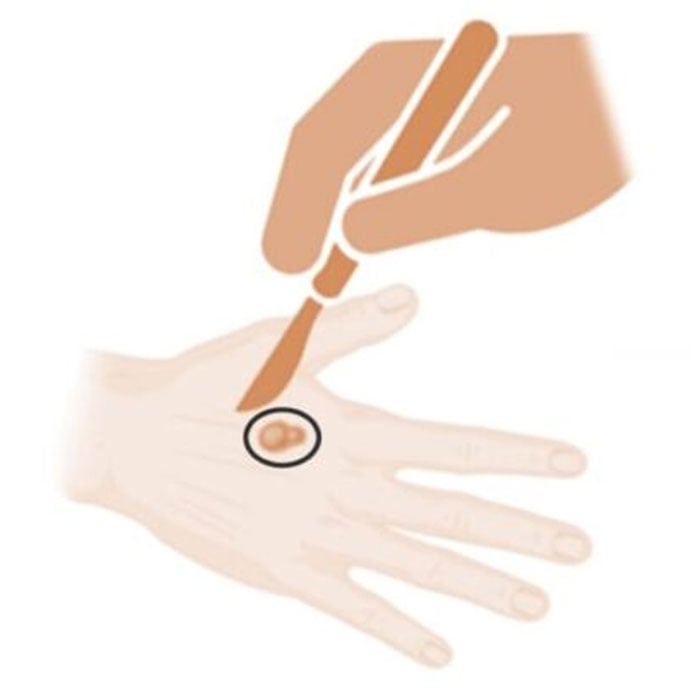
Also referred to as excisional skin surgery, this involves the removal of the tumor and some surrounding healthy skin and soft tissue, called a margin. The size of the margin depends on the size of the growth. Some of the lymph nodes may also be removed.
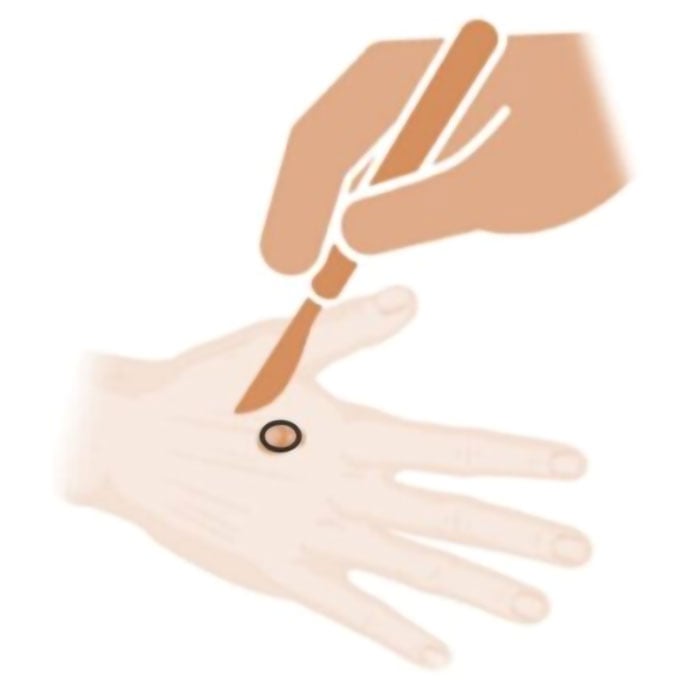
Mohs surgery
This surgical procedure involves cutting away thin layers of the growth and then immediately examining each layer under a microscope. The surgeon continues to shave away tissue until no cancer cells can be seen under the microscope. This method allows the surgeon to remove all the cancer and only a small bit of healthy tissue.
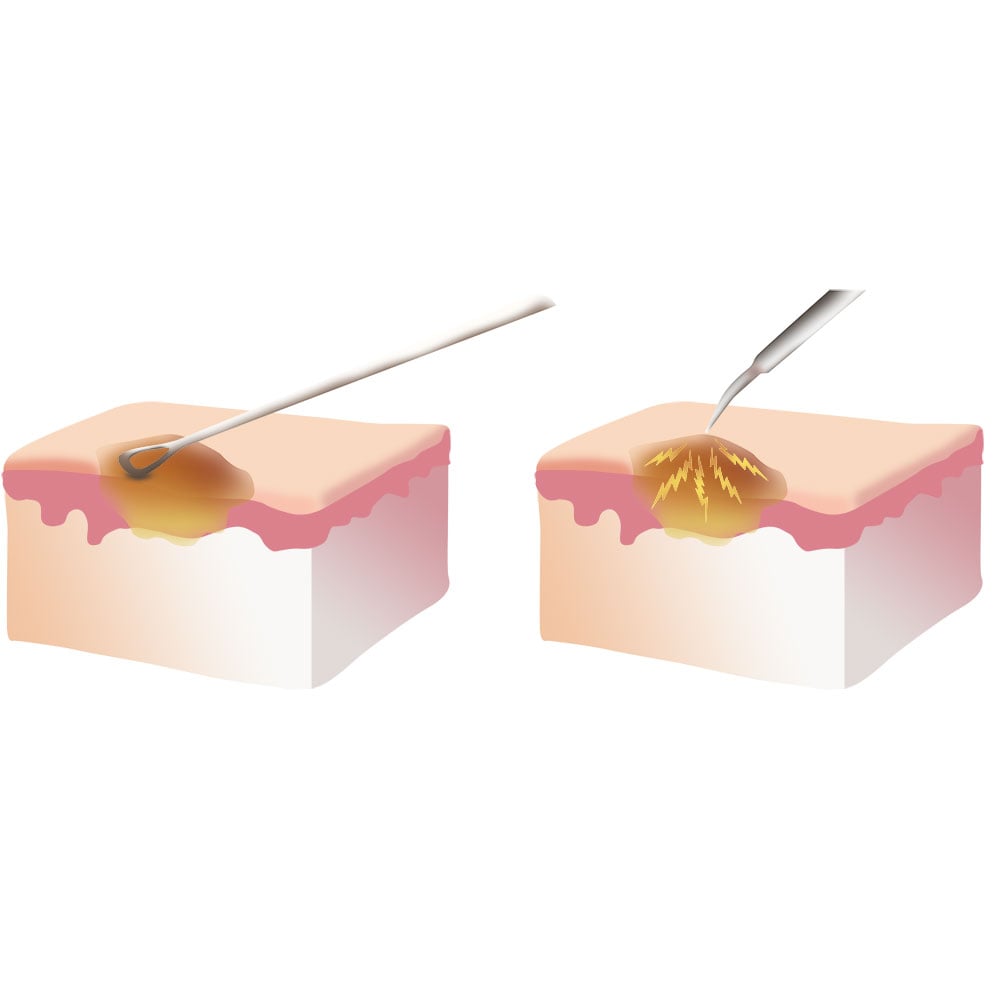
Curettage and Electrodesiccation
This procedure is used to remove small basal cell skin cancers and can usually be performed in the doctor’s office. The area to be treated is numbed, and the cancer is removed with a sharp tool called a curette. This tool is shaped like a spoon to remove the cancer and some of the tissue around it. An electric current is then sent into the treated area to control bleeding and kill any cancer cells that may be left.
External Beam Radiation Therapy
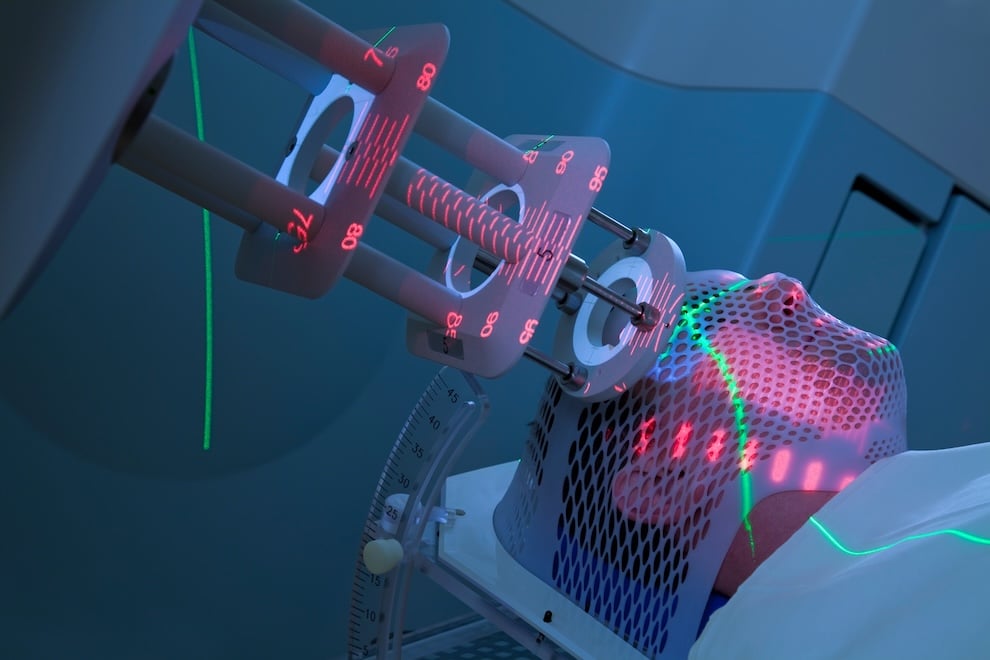
If radiation is needed, the most common method used for skin cancer is external beam radiotherapy. A machine called a linear accelerator delivers the radiation to the precise area where the cancer was located.
Patients in the Clearwater area can receive intensity-modulated radiation therapy (IMRT), an advanced form of external beam radiation treatment that is typically used for skin cancer at West Florida Radiation Therapy. IMRT allows precise targeting of tumor cells with high-energy beams of radiation, using 3D modeling. The beams are adjusted to different intensities based on the shape of the tumor. This helps the radiation oncologist deliver a higher dose to the targeted area while limiting damage to surrounding healthy tissue.
Most patients receive external beam radiation therapy five days a week, for 4-6 weeks, to ensure the cancer cells are eliminated.
Radiation Therapy Side Effects
- Rash or redness where therapy is given
- Inflammation or itchiness of the skin in the treatment area
- Change in skin color, such as redness, similar to a sunburn
- Hair loss in the treatment area
- Fatigue
- If treatment is on the lower half of the face, there can be damage to saliva-making glands and teeth (resulting in dry mouth and tooth decay)
In most cases, these side effects improve over time after treatment is complete. However, your radiation oncology team can prescribe something or offer helpful tips that can provide relief.
Other Nonmelanoma Skin Cancer Treatments
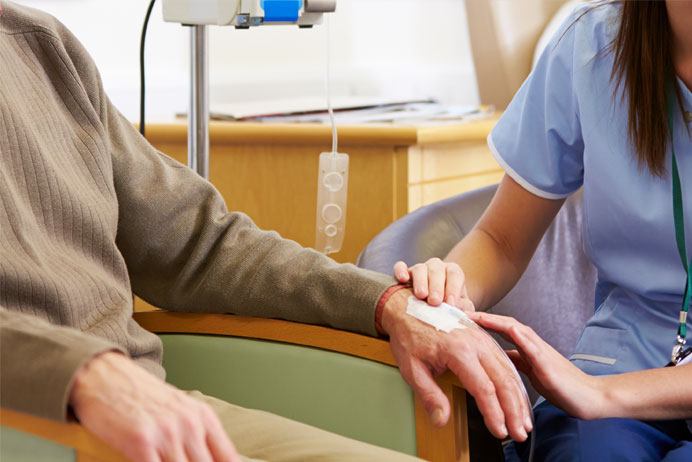
Chemotherapy
Chemotherapy is a treatment that uses drugs to stop the growth of cancer cells, either by killing them or by stopping them from dividing. For nonmelanoma skin cancer, chemotherapy is usually administered topically as a cream or ointment. It can also be given systemically for more advanced cancer.
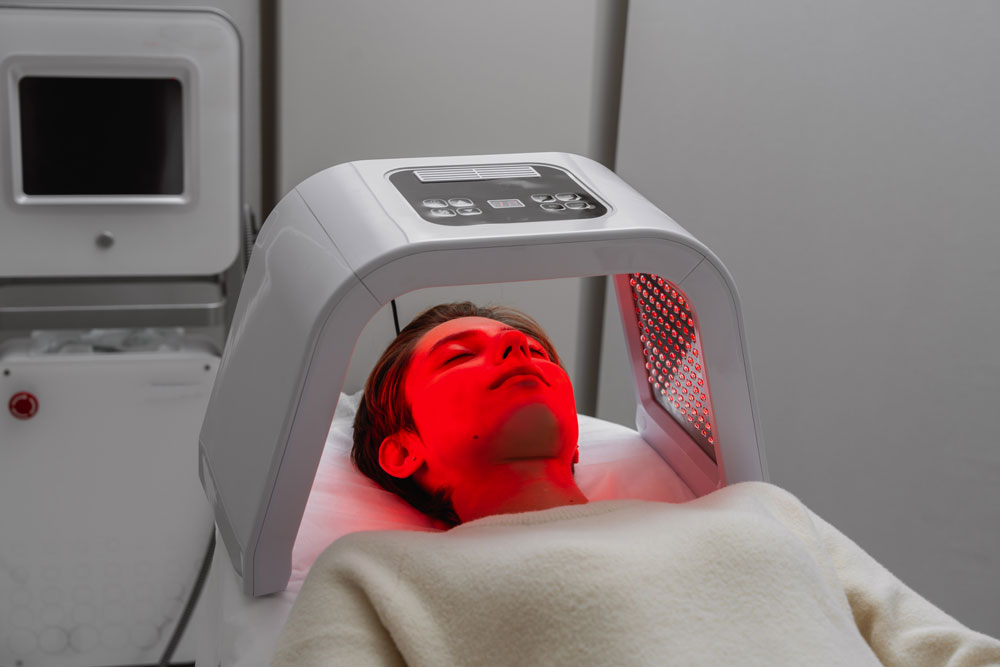
Photodynamic Therapy
Photodynamic therapy (PDT) is a two-stage treatment that combines light energy with a chemical, called a photosensitizing agent, to kill cancer cells. Photodynamic therapy is used to treat cancer on or very near the surface of the skin and is often done topically with a cream or with an injection.
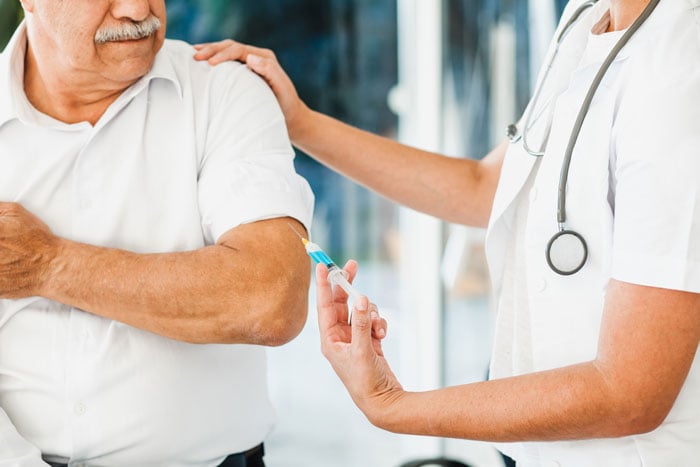
Immunotherapy
Immunotherapy uses your immune system to fight cancer. Substances made by the body or made in a laboratory are used to boost, direct, or restore the body's natural defenses against cancer. The type of immunotherapy drug used will be determined based on the specific type of nonmelanoma skin cancer.
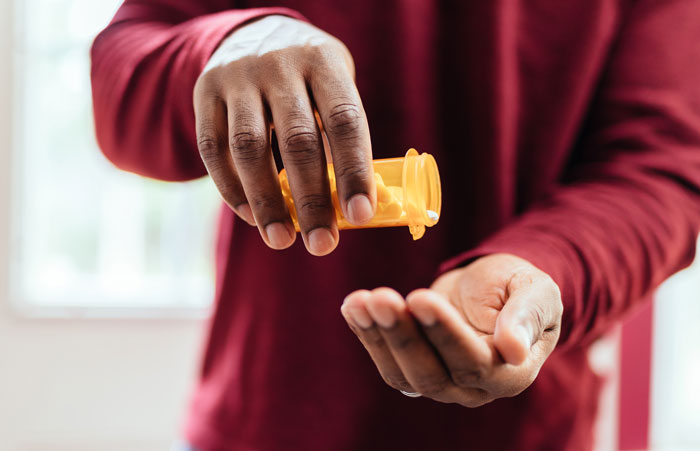
Targeted Therapy
Targeted therapy is used when a specific genetic change is identified in the patient. It’s mostly used for large or advanced basal cell nonmelanoma cancers that can’t be treated with surgery or radiation therapy.